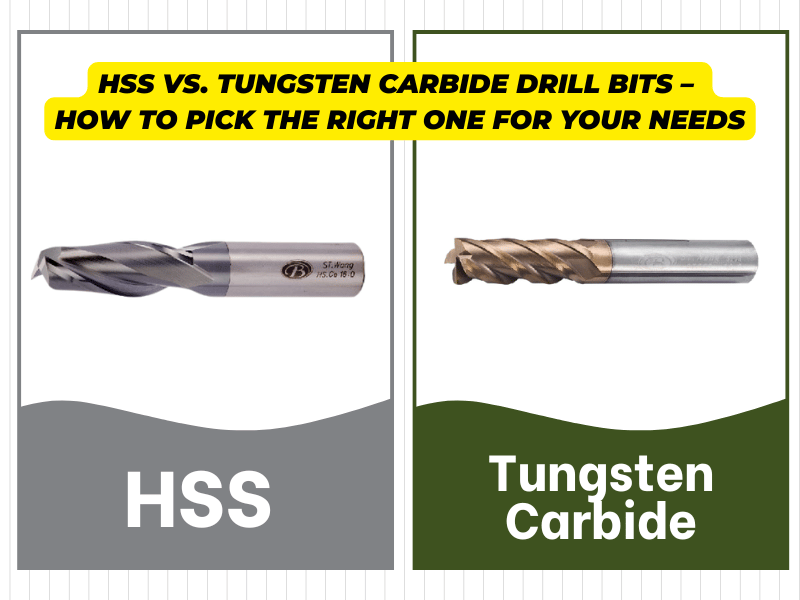
HSS vs. Tungsten Carbide Drill Bits – How to Pick the Right One for Your Needs
Choosing the right drill bit directly affects cycle time, surface finish, and tool life. The two most common choices—HSS (High-Speed Steel) drill bits and Tungsten Carbide drill bits—excel in different situations. This guide explains the differences, how to choose for your materials and setup, and when it makes sense to step up to indexable solutions.
About us: SHANG TZANG WANG (Stwang) Enterprise Co., Ltd. manufactures both HSS and Tungsten Carbide drill bits. We also offer indexable drills and a full range of carbide inserts. Manufacturers are welcome to contact us for specifications, quotes, or custom tooling.
1) Quick Take: Which one when?
- Pick HSS for general-purpose drilling on softer materials, flexible setups, and lower upfront cost.
- Pick Tungsten Carbide for hard or abrasive materials, high spindle speeds, tight tolerances, and long, repeatable production runs.
2) What is an HSS Drill Bit?
HSS (High-Speed Steel) is a tough tool steel that resists chipping and tolerates vibration better than carbide. It’s easy to re-sharpen, budget-friendly, and versatile for:
- Mild/low-carbon steels, aluminum, brass, plastics, wood
- Manual machines or CNCs with modest rigidity
- Small to medium batch sizes where flexibility matters
Pros: Tough, forgiving, re-sharpenable, low initial cost
Cons: Lower hot hardness and wear resistance; slower feeds/speeds; shorter life in hard materials
3) What is a Tungsten Carbide Drill Bit?
Carbide is a sintered, ultra-hard material with excellent hot hardness and wear resistance. It holds a sharp edge far longer at high RPM and feed, ideal for:
- Stainless steels, tool steels, cast iron, titanium and nickel alloys
- High-speed CNCs with good rigidity and coolant supply
- Mass production where consistency and uptime matter
Pros: High wear resistance, stable at high temperature, long tool life, superior hole quality
Cons: Higher price, more brittle—needs rigid setups and proper fixturing
4) Head-to-Head Comparison
| Feature | HSS | Tungsten Carbide |
|---|---|---|
| Hardness & Heat | Lower | Very high |
| Cutting Speed | Moderate | Excellent at high speeds |
| Tool Life | Shorter | Much longer in hard/abrasive materials |
| Edge Toughness | Tough, forgiving | Brittle if setup vibrates |
| Sharpening | Easy | Specialized equipment |
| Cost | Lower upfront | Higher upfront, lower cost per hole in production |
5) How to Choose: A Simple Framework
- Material
- Aluminum, brass, plastics → HSS or uncoated/aluminum-grade carbide
- Mild steel → HSS (cost-effective) or carbide for higher productivity
- Stainless/tool steel/cast iron, titanium/nickel alloys → Carbide with proper coating
- Machine & Setup
- Limited rigidity, manual machines → HSS is safer
- Rigid CNC, through-coolant, high RPM → Carbide shines
- Production Volume
- Prototyping/low volume → HSS maximizes flexibility, lower spend
- Medium–high volume → Carbide reduces tool changes and cost per hole
- Hole Requirements
- Tight tolerance, high surface quality, deep holes → Prefer carbide (ideally with internal coolant)
- Budget & ROI
- Consider cost per hole, not just tool price
6) Coatings & Coolant (Big Impact)
- Coatings:
- TiN/TiCN for general steel on HSS or carbide
- TiAlN/AlTiN/AlCrN for high heat in steels and stainless
- TiB₂ or DLC-type coatings for aluminum to reduce built-up edge
- Coolant:
- External coolant helps, but internal coolant (through-coolant drills) greatly improves chip evacuation and heat control—especially for deep holes or stainless/titanium
7) When to Consider Indexable Drills
If you’re drilling larger diameters or want lower consumable costs:
- Indexable drills let you replace only the inserts, not the whole tool body—minimizing downtime and inventory.
- Excellent for CNC environments and repeat jobs; compatible geometries and grades cover many materials.
We also supply carbide inserts in multiple geometries and grades to match your materials and cutting parameters.
8) Common Pitfalls (and Fixes)
- Chatter/chipping on carbide: Improve rigidity—shorter overhang, better fixturing; reduce runout; tune feed per rev.
- Built-up edge in aluminum: Use sharp geometry and Al-grade coating (e.g., TiB₂/DLC); increase RPM, optimize coolant.
- Short tool life in stainless: Use coated carbide, reduce heat with proper coolant, avoid rubbing—keep chip load up.
- Poor chip evacuation in deep holes: Use through-coolant drills, peck cycles only when necessary, and correct feed per rev.
9) Why Choose SHANG TZANG WANG (Stwang)
- Both lines in-house: HSS and Tungsten Carbide drill bits
- Indexable drill systems & carbide inserts to reduce cost per hole
- Custom geometries and coatings for your material, machine, and volume
- Application support: Feed/speed starting points, troubleshooting, and ROI analysis
Manufacturers are welcome to inquire—share your material, hole size/depth, machine, and coolant setup. We'll recommend the most cost-effective tool for your job.