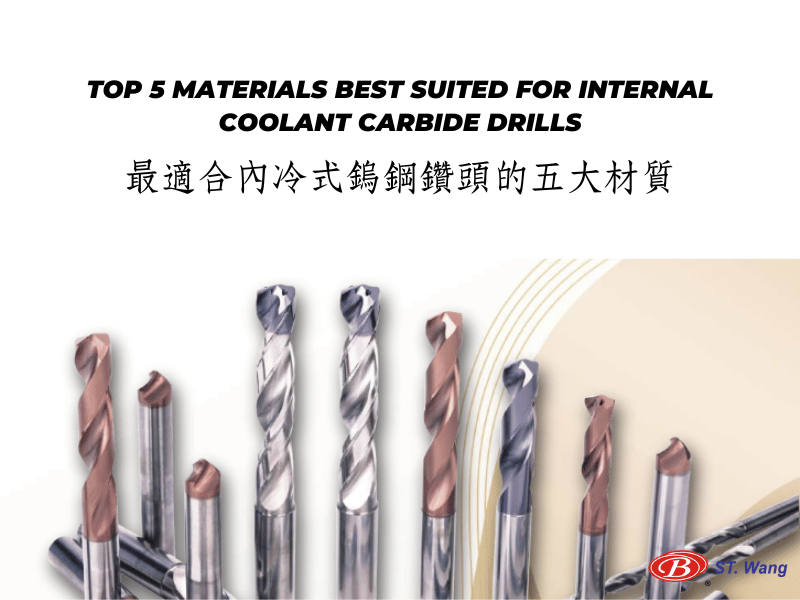
Top 5 Materials Best Suited for Internal Coolant Carbide Drills
Internal coolant carbide drills are an essential innovation in modern machining. By delivering coolant directly through internal channels to the cutting edge, these drills improve chip evacuation, reduce heat buildup, and extend tool life. But to maximize their potential, it’s important to understand which materials benefit the most from this technology. Below, we outline the top five materials best suited for internal coolant carbide drills and explain why they are the optimal choice.
1. Stainless Steel
Stainless steel is tough and has low thermal conductivity, which means heat tends to concentrate at the cutting zone. This can cause rapid tool wear and work hardening. Internal coolant carbide drills address this problem by delivering coolant exactly where it’s needed, lowering temperature and flushing chips away. This ensures stable drilling performance, longer tool life, and cleaner hole finishes.
2. Titanium Alloys
Titanium is lightweight and strong but notorious for poor thermal conductivity and high reactivity at cutting temperatures. Heat often builds up quickly, leading to tool chipping and premature wear. Internal coolant carbide drills are particularly effective in titanium machining, as the direct coolant flow reduces thermal stress while preventing chip adhesion. This results in more consistent performance in aerospace and medical component manufacturing.
3. Nickel-Based Superalloys (e.g., Inconel)
Nickel alloys are widely used in aerospace and energy industries due to their ability to withstand extreme environments. However, they are very difficult to machine because of their hardness and tendency to generate extreme heat. Internal coolant delivery keeps the cutting edge cool and helps manage long, tough chips that would otherwise damage the drill. With proper cutting parameters, carbide drills with internal coolant enable reliable drilling of these demanding materials.
4. Hardened Steels
When machining hardened steels (above 45 HRC), tool stress and heat management are critical. Traditional external cooling may not penetrate deep enough into the cutting zone, leading to tool cracking or burning. Internal coolant carbide drills overcome this challenge by providing targeted lubrication, extending tool life, and achieving superior surface quality even in deep-hole drilling.
5. Aluminum Alloys (High-Speed Machining)
Although aluminum is soft compared to superalloys or hardened steels, it can still benefit from internal coolant—especially in high-speed machining or when drilling deep holes. The coolant not only cools the tool but also prevents chip clogging and improves surface finish. For aluminum components in automotive and electronics applications, internal coolant carbide drills deliver higher productivity and reduced downtime.
Conclusion
Internal coolant carbide drills are not limited to one material—they are versatile tools that shine when tackling difficult-to-machine alloys or high-volume production. By choosing the right drill for the right material, manufacturers can reduce downtime, extend tool life, and achieve higher precision.
SHANG TZANG WANG ENTERPRISE CO., LTD. specializes in producing a wide range of carbide drills, including internal coolant carbide drills designed for stainless steel, titanium, superalloys, hardened steels, and aluminum. Whether you are in aerospace, automotive, or precision engineering, our solutions are engineered to help you maximize efficiency and reliability.
For more information, please refer to our catalog.